
Read the Shade after the Bell
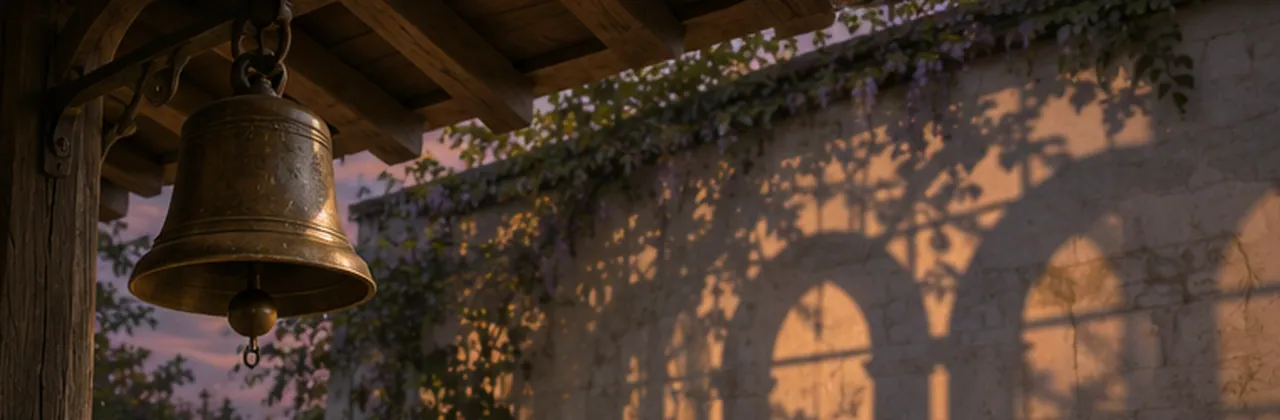
Return to a wall that still holds a line
After the third bell there is a small shadow almost hidden under the lower window sill. In the previous watch the line still touched the edge of the post, and you could see it from the center of the arcade. Walk closer now and part of the line seems to have grown longer while another part has vanished. The first trial ended the scene immediately after the sound. A person could miss how that last light had changed.
Keep the sound separate from the reading
We left the scene active after the bell, giving the player room to turn and compare the earlier position with the new one. A tile near the sill provides a place to put the camera low. From there the outline under the window reaches a thin patch of light on the opposite side. Reading that overlap makes the timing of the sound meaningful even after it is gone. The next chime is unnecessary for this check.
Pin the view to a physical corner
One older drawing used the bell’s shadow as the main reference. When the sun crossed the roofline, that detail lost contrast too quickly to work. We added an exposed cut on the end of the window ledge. Its edge stays darker while the rest of the wall receives less light. The last trace of the shadow remains visible beside it if you stand in the place where the earlier view opened.
Check the base of the post
The Third Shadow Bell sends the player toward the third support near a short side path. Its base is dark before the sound and gets slightly lighter after it. That change does not show the entire beam shape. It gives a hint that more light has reached the lower part of the arcade, where the line can be traced back to the window. Visit both places while the sound is fresh enough to remember which event came first.
Compare separate parts of the old scene
The shadow below the sill holds the angle of part of the old line. The dark border around the post preserves a point where the longer line passed. A player might use the sill first and search for the post from there. Another might start from the post and find the wall already changed. Either order gives a useful result if the same two shapes remain recognizable after the other sounds in the garden resume.
Include a longer silence in the test
At first the movement of nearby leaves continued at the previous speed through the silence. It made the moment after the bell feel like part of the same interval. The updated scene slows a few small movements near the frame while the older shade can still be read. We did not freeze the whole garden. A small band at the side of the path still moves and gives a sense of how short the extra watch should be.
Read the later angle from a second place
Where the Window Shade Points studies the diagonal nearer the time when it reaches the footpath. Walk around the low post after the bell, and the short new angle is visible farther away from the window. It can look like a new shape until you find the cut in the end of the stone. That cut appears to change size but remains in the same part of the wall, where another comparison can begin.
Leave the ending near the beginning
Light Studies ties this last watch back to its first question about the double shadow. Both ask how much of a shape can still be read when something else crosses it. The path beyond the third bell leads toward the opening arcade so you can see the changed line from a distance. On another route through the garden we will check whether a different stone still gives the player a way to recognize where the earlier watch ended.